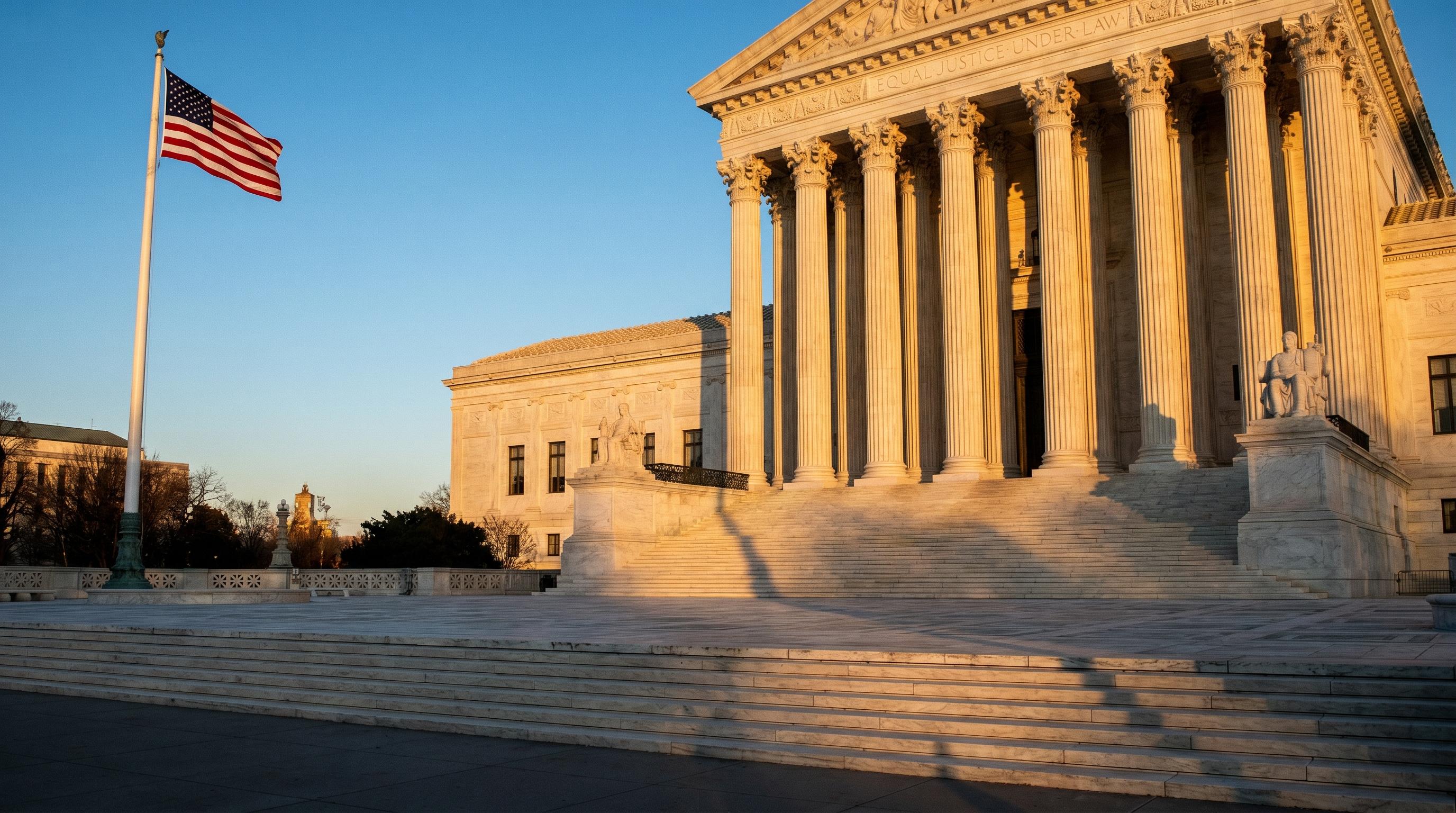
Supreme Court Strikes Louisiana Map, Triggers Nationwide Redistricting Sprint
The Supreme Court on Wednesday struck down Louisiana's second majority-Black congressional district, ruling that drawing maps explicitly to elect a minority candidate amounts to an unconstitutional racial gerrymander.
Writing for a six-justice conservative majority, Justice Samuel Alito declared that "the Constitution almost never permits the Federal Government or a State to discriminate on the basis of race," and held that Louisiana had not articulated a compelling interest sufficient to justify race-based map drawing.
The political fallout was immediate. Within an hour, the Republican-controlled Florida House approved a new congressional map projected to net the GOP four additional seats. In Louisiana, Gov. Jeff Landry told Republican House candidates he is considering suspending the state's upcoming primary so the legislature can redraw lines first.
What it means for 2026
Analysts at both parties' campaign arms are working overnight to model a redrawn map. Democratic strategists privately concede the ruling could cost them as many as 19 House seats. Republicans say the number is smaller and downstream — only a handful of districts can be redrawn in time for November.
The longer-term consequences fall on the 2030 redistricting cycle, where the ruling will reshape the maps of every state with significant minority populations.
The dissent
Justice Sotomayor's dissent, joined by Justices Kagan and Jackson, argued the majority had effectively "gutted" Section 2 of the Voting Rights Act. "What the Court calls colorblindness," she wrote, "is in fact blindness to the history that produced these maps in the first place."
Republicans countered that the ruling restores the constitutional baseline. "Sorting voters by race is the problem, not the solution," Senate Majority Leader John Thune said in a statement.
Karen Whitfield
Staff Writer, Idiocracy News
Comments
No comments yet. Start the conversation.
Fauci Took the Fifth More Than 100 Times. Now the Decision Belongs to Jeanine Pirro.
Rand Paul's committee referred Anthony Fauci for criminal contempt after he declined to answer more than a hundred questions. There is 130-year-old precedent that says a pardon takes the Fifth Amendment away.
The Daily Brief
Get the stories the networks skip
One email. The headlines that matter, with no corporate filter. Unsubscribe in a click.

Comments are moderated. Be civil, no spam, no links to junk.