
Universal School Choice Reaches Eight States in 18-Month Sprint
Tennessee and Pennsylvania become the latest. The model is converging on full ESA portability.
NASHVILLE — Tennessee Gov. Bill Lee on Tuesday signed into law the eighth universal school-choice program in the United States, formally lifting the income cap on the state's existing Education Savings Account program and making every K–12 student in the state eligible.
Pennsylvania's PA Award follows in three weeks. The policy that started as a fringe idea on the conservative think-tank circuit is now law for roughly 28 million American children — about half of all K–12 students nationwide.
What "universal" means now
The eight programs — in Arizona, Florida, Iowa, West Virginia, Utah, Arkansas, Tennessee, and Pennsylvania (effective July 1) — share a common architecture: every K–12 child, regardless of family income, is entitled to a per-pupil scholarship account, denominated in dollars roughly equivalent to the state's per-pupil public school spending. The funds can be spent on private school tuition, microschool tuition, homeschool curriculum, tutoring, transportation, special-needs services, or testing.
The portability is the point. The funds follow the child, not the system.
What the data is starting to show
The first cohorts in Arizona's full universal program — the 2024–25 school year — are now generating empirical results that the policy world has been waiting for.
The early signal is that participation is far broader than the means-tested critics predicted. Forty-two percent of Arizona ESA users in 2024–25 had never previously attended a private school. Forty percent of new applicants reported household incomes under $75,000.
"The portrait of a school-choice family was supposed to be wealthy suburbanites. The data says it's working-class parents whose neighborhood school stopped working for their kid," said Robert Enlow, president of EdChoice, the policy group that has tracked the empirical literature for two decades.
The teachers' unions' counter
The American Federation of Teachers and the National Education Association continue to argue the programs siphon money from public schools and lack adequate accountability. AFT President Randi Weingarten said in a statement that the universal model is "a defunding strategy with a marketing budget."
The states answer that their per-pupil public-school funding has, on the whole, increased over the years choice has expanded — because legislatures have funded the new accounts on top of, not in place of, public-school appropriations. Critics counter that this can't continue forever and that the squeeze will arrive once enrollment swings hit district budgets at scale.
What's next
Six additional states — Texas, Ohio, North Carolina, Georgia, Indiana, and Missouri — have universal-eligibility bills moving through their 2026 legislative sessions. If even three pass, more than 60% of American K–12 students will live in states with universal portability by the end of the year.
The empirical case will harden over the next 24 months as longitudinal achievement data from the early-adopter cohorts comes in. Whether that data confirms or refutes the choice movement's foundational claim — that competition lifts outcomes — will matter more, in the long run, than how many states pass the bill.
Rebecca Hartwell
Staff Writer, Idiocracy News
Comments
No comments yet. Start the conversation.
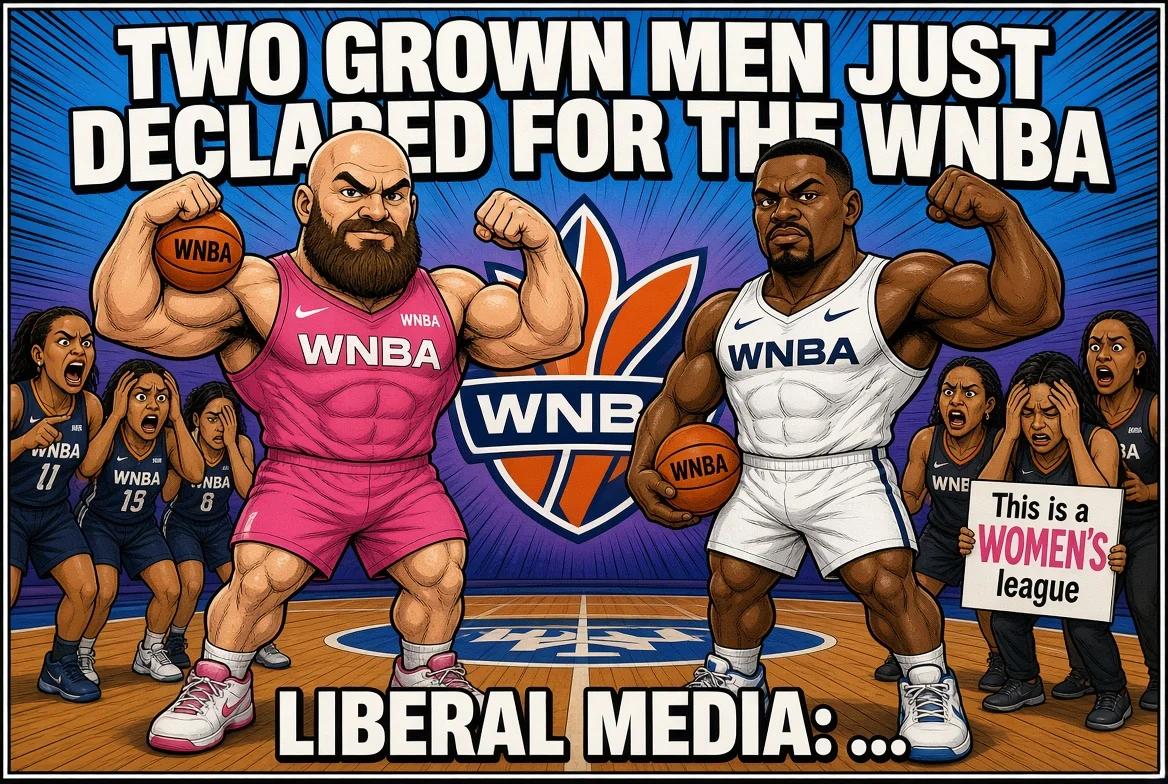
Two Former NBA Players Declared for the WNBA Draft. The Newsrooms That Lecture Us About Inclusion Went Quiet.
The WNBA's eligibility rule says 'only players who are women are eligible.' Across 409 pages, the agreement never defines the term — and two retired men have now built their entire argument on that gap.
The Daily Brief
Get the stories the networks skip
One email. The headlines that matter, with no corporate filter. Unsubscribe in a click.


Comments are moderated. Be civil, no spam, no links to junk.