
The July Jobs Report Was Weak. The Line the White House Cares About Went the Right Way.
Payrolls grew 73,000 — a soft number by any reading. Underneath it, native-born employment is up roughly two million since January 2025 while foreign-born employment has fallen, the first sustained reversal of that split in a generation.
The July employment report gave both sides of the argument something usable, which is why it has been described this week as a disaster and as a vindication by people looking at the same release.
Nonfarm payrolls grew by 73,000. That is a weak print. It is below the replacement rate for population growth, below consensus, and consistent with a labor market that has been decelerating since spring.
The household survey told a different story about who is working. Employment among native-born Americans came in at roughly 133.0 million in July, up from about 131.0 million in the same month of 2024. Foreign-born employment fell over the same stretch, to about 30.8 million from 31.0 million. Labor Secretary Lori Chavez-DeRemer noted that native-born workers accounted for the entirety of net job growth.
Why this is the number the administration wants read
For twenty years, the standard chart in any labor-market briefing showed foreign-born employment rising faster than native-born employment through every phase of the cycle. Through the 2010s recovery and again after 2021, immigrant workers absorbed a disproportionate share of new jobs while native-born participation among prime-age men in particular stayed stubbornly below its 2000 level.
The consensus explanation offered by economists and by both parties' leadership was that those were jobs Americans would not take, in a labor market that could not clear without a growing foreign-born supply. That claim was made confidently and repeatedly, and it has now been tested by a large policy change running in the opposite direction.
The result is that the split has inverted. It has stayed inverted for several consecutive quarters. Whatever else is true, the assertion that native-born employment cannot rise when immigrant employment falls is not holding up in the data.
The honest caveats
These figures come from the household survey, not the establishment survey that produces the headline payroll number. The two are measured differently, and the nativity breakdown is not seasonally adjusted, which makes month-to-month comparisons noisy. Year-over-year is the only responsible way to read it, and that is how the figures above are stated.
The critics' substantive objection also deserves a straight answer. Analysts at Cato and elsewhere argue that employment is not a fixed pot, that native-born and foreign-born workers are complements rather than substitutes across most of the economy, and that a shrinking labor force will eventually show up as slower growth rather than as better outcomes for Americans.
The first two points are defensible in the long run and mostly beside the point in the short run. The third is the real test, and it has not been run yet.
What to watch instead of the headline
The number that will settle this is wages at the bottom.
If a tighter labor supply is doing what supply and demand say it should, real wage growth in the lowest quartile — construction, warehousing, food service, meatpacking, hospitality — outruns the top quartile for several quarters running. That is the outcome three decades of stagnation at the bottom were supposed to be impossible to fix, and it is the thing worth measuring.
If instead the bottom quartile stalls while payroll growth keeps sliding toward zero, the critics have their case and it is a strong one.
What's next
The August report lands in early September, and the Federal Reserve meets before the end of the quarter with a 73,000 print in hand and inflation still running above target. That is an uncomfortable pair of facts for a committee that has been promising a soft landing.
For the White House, the political frame is already set: fewer jobs overall, more of them held by Americans. Whether voters read that as a trade worth making is the entire argument of the fall.
Karen Whitfield
Staff Writer, Idiocracy News
Comments
No comments yet. Start the conversation.
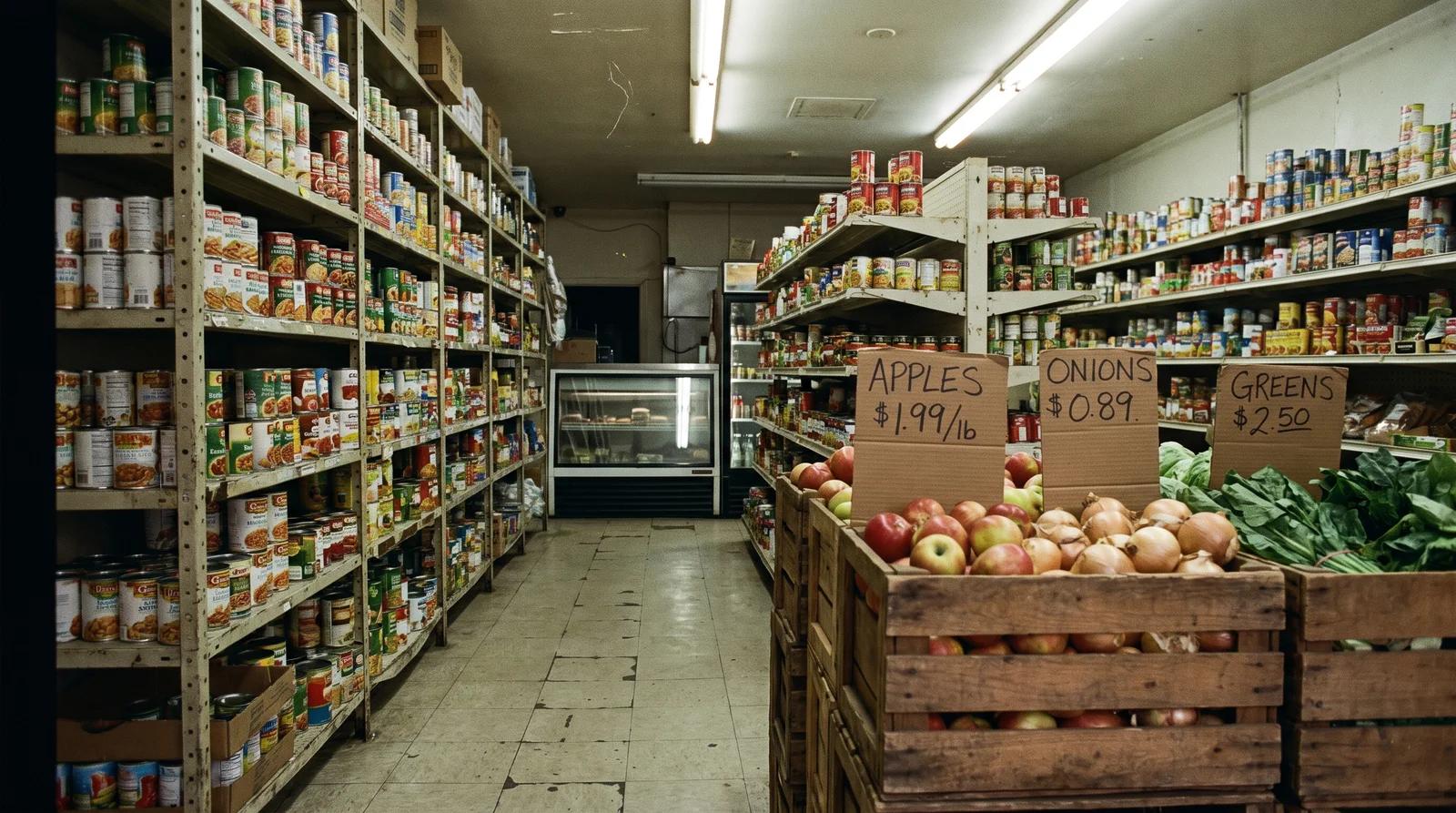
New York Is About to Spend $70 Million Proving Grocery Stores Are Harder Than They Look
Five city-owned grocery stores by 2029, the first in Hunts Point by the end of next year. The plan's arithmetic works only if you never ask who absorbs the difference.
The Daily Brief
Get the stories the networks skip
One email. The headlines that matter, with no corporate filter. Unsubscribe in a click.


Comments are moderated. Be civil, no spam, no links to junk.