Fauci Faces Lifetime Federal Ban Under New Bill After 111 Fifth Amendment Pleas
Rep. Rich McCormick's STOP the SWAMP Act would bar stonewalling officials from ever drawing another federal paycheck.
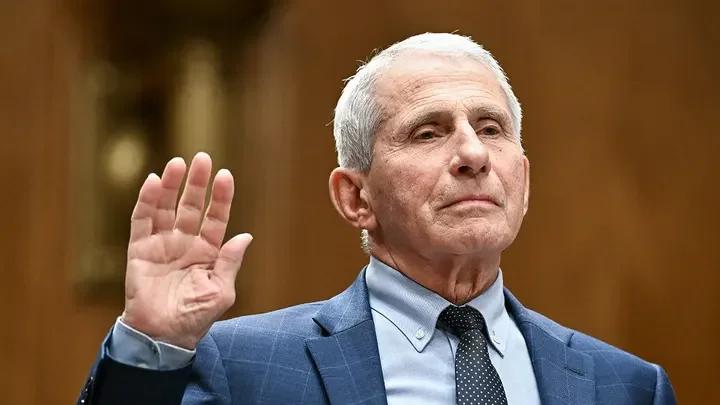
WASHINGTON — Two days after Dr. Anthony Fauci sat before a Senate committee and invoked his Fifth Amendment privilege 111 separate times, a House Republican has introduced legislation that would make that performance the last one he ever gives on the federal payroll.
Rep. Rich McCormick, R-Ga., unveiled the STOP the SWAMP Act on Friday. The bill would bar federal employees from continued government service if they refuse to answer congressional questions about their official conduct, authorize criminal referrals for officials who unlawfully withhold information from lawmakers, and permanently disqualify anyone convicted of perjury from federal employment.
McCormick has framed the measure in terms most Americans will recognize from their own working lives. In the private sector, an employee who declines to explain what he did on company time does not remain an employee. The bill asks why the standard should invert the moment the employer becomes the taxpayer.
What triggered the bill
Fauci appeared July 29 before the Senate Committee on Homeland Security and Governmental Affairs, chaired by Sen. Rand Paul, R-Ky. Over roughly three hours, the former NIAID director — who ran the institute for 38 years — declined to answer question after question, citing the Fifth Amendment.
The hearing followed the release of Fauci's pandemic-era diaries, which included entries that appear to show him taking credit for the school-closure policies he publicly disclaimed. In January 2024 he told the country flatly: "I did not close the schools."

Paul announced after the hearing that his committee would move toward contempt of Congress proceedings.
Why a pardon doesn't end the argument
Fauci holds a preemptive federal pardon issued by President Biden. Republicans argue that the pardon is precisely why the Fifth Amendment claim collapses: the privilege protects against self-incrimination, and a man who cannot be federally incriminated has nothing to be protected from.
"The pardon was supposed to be mercy. It's being used as a muzzle," a senior Republican committee aide told Idiocracy News. "You can't accept immunity and then claim you still need protection from the thing you're immune to."
Democrats counter that the privilege survives, particularly where state charges remain theoretically available. Fauci faces no criminal charges and denies wrongdoing.
What it means politically
The bill is unlikely to reach the president's desk in this Congress, and McCormick's office has not claimed otherwise. Its function is closer to a marker — a statement that the era of unelected officials treating congressional oversight as optional has an expiration date.
That marker lands in a favorable environment. Two aides on the House Oversight Committee said internal counts already show broad Republican support for the concept, and that the harder question is whether leadership wants a floor fight before the fall calendar fills.
What's next
Paul's committee is expected to circulate a contempt resolution in the coming weeks. A Senate contempt vote would require 60 votes to clear a filibuster — a threshold Republicans do not currently have — which is why attention has shifted toward a direct referral to the Justice Department accompanied by a legal brief on the pardon question.
That path has its own history. The Obama Justice Department declined to prosecute IRS official Lois Lerner in 2014 after she, too, invoked the Fifth before Congress. Whether this Justice Department makes the same choice is the question McCormick's bill is designed to make politically expensive.
Sam Caldwell
Staff Writer, Idiocracy News
Comments
No comments yet. Start the conversation.

Fauci Took the Fifth More Than 100 Times. Now the Decision Belongs to Jeanine Pirro.
Rand Paul's committee referred Anthony Fauci for criminal contempt after he declined to answer more than a hundred questions. There is 130-year-old precedent that says a pardon takes the Fifth Amendment away.
The Daily Brief
Get the stories the networks skip
One email. The headlines that matter, with no corporate filter. Unsubscribe in a click.


Comments are moderated. Be civil, no spam, no links to junk.