
The 2026 Midterm Numbers Are Strange. They Deserve a Closer Look.
Polls missed by nine points or more in Texas and Georgia. A Trump +13 state swung 17 points in two years. Two Senate seats could come down to ballots no one has counted yet. None of that proves anything, but all of it calls for transparency.
WASHINGTON — Let's be clear about what this article is and isn't. Nobody at Idiocracy News is claiming the 2026 midterms were stolen. No candidate who lost has said so. Democrats won, and they won big.
But anyone who looks at the numbers coming out of Tuesday night should say the obvious thing: some of them are very unusual. When results land this far outside what every model, poll and historical pattern predicted, the right response isn't a shrug. It's a closer look, done in public with the data on the table.
Here's what stands out.
The polls missed by more than they did in 2016
Remember 2016, when the polls underestimated Donald Trump and the press spent a year doing soul-searching? This year's misses were bigger, and they all went the same way.
The final Silver Bulletin average had Democrats ahead by about 8.9 points on the national House ballot. Early counts put the actual margin near 13. Race by race, comparing the final RealClearPolitics averages with AP's preliminary results, the gaps are startling:
| Race | Final polling average | Preliminary result | Miss | |---|---|---|---| | Texas Senate | D+2.6 | D+12.1 | 9.5 pts | | Texas Governor | R+2.3 | D+7.1 | 9.4 pts | | Georgia Senate | D+8.6 | D+18.0 | 9.4 pts | | North Carolina Senate | D+11.0 | D+19.6 | 8.6 pts | | Georgia Governor | D+0.3 | D+8.6 | 8.3 pts | | South Carolina Senate | R+2.6 | D+4.4 | 7.0 pts | | Iowa Senate | Tied | D+4.1 | 4.1 pts |
Every one of those errors favors the same party. Random polling error doesn't usually line up that neatly. Greg Abbott, who won Texas by double digits in 2022, went from a 2-point polling lead to a 7-point loss.
Swings that break the history books
Trump carried Iowa by 13 points in 2024. Two years later, a Democrat won its open Senate seat by about 4. That's a 17-point swing in one cycle. Kansas elected its first Democratic senator in nearly a century. In New Jersey's 2nd District, Rep. Jeff Van Drew had won by almost 17 points in 2024, and he lost. Virginia's 1st District had been Republican since 1977.
Waves happen, and 2006 and 2010 were real. But the size and uniformity of these swings, across very different states with very different election systems, belongs in the "explain this to me" column.
Two Senate seats hanging on uncounted ballots
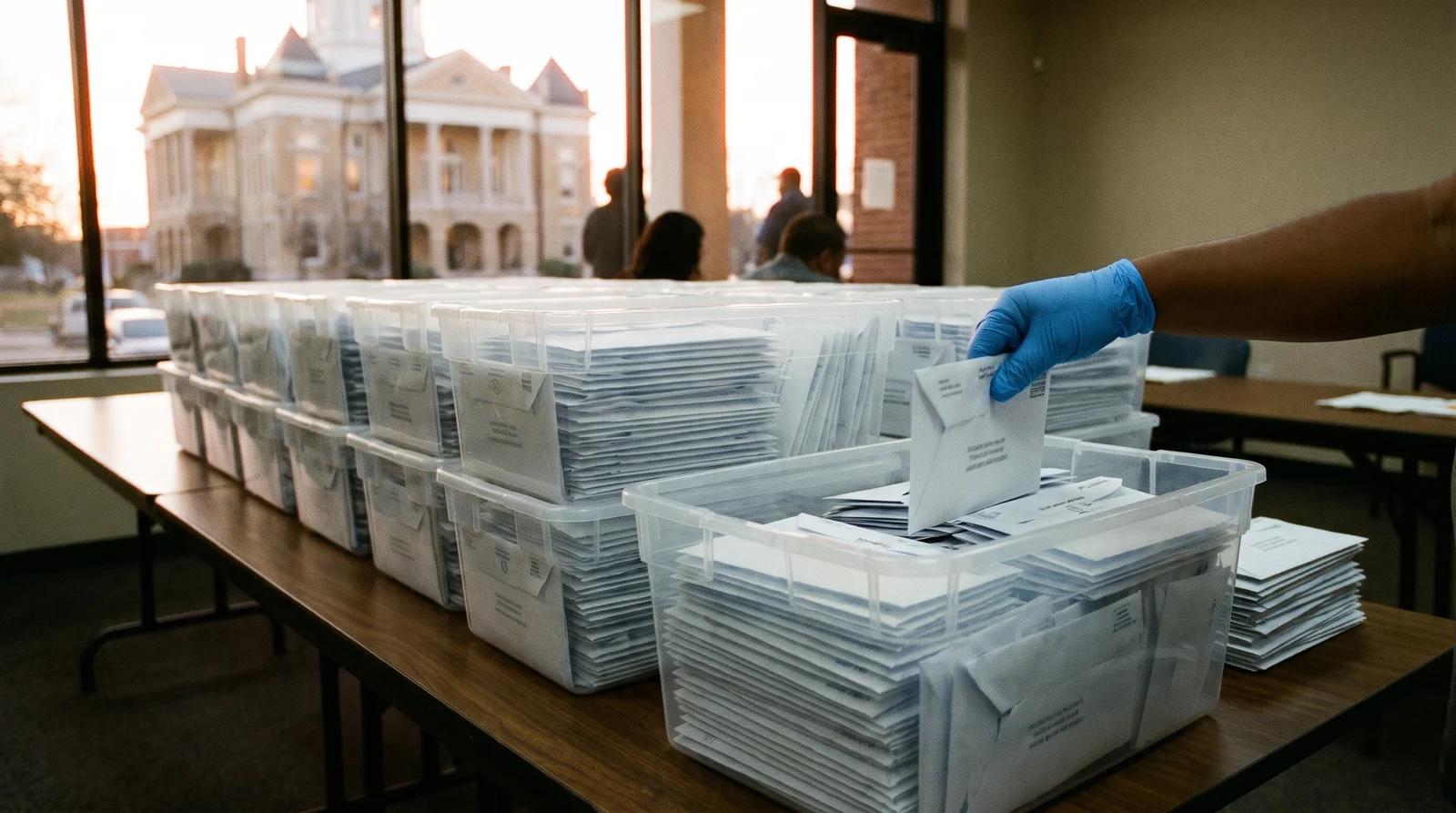
Mississippi. As of Wednesday night, Democrat Scott Colom led Sen. Cindy Hyde-Smith by 1,138 votes. By Friday, his lead had grown to about 2,500 as late ballots came in. About 3,600 mail-in absentee ballots were still outstanding. Secretary of State Michael Watson says another 12,000 to 20,000 affidavit ballots still have to be resolved, and those cast by voters who couldn't show ID at the polls count only if the voter comes back with acceptable identification. That's potentially five to eight times the current margin, sitting in a pool most voters never hear about. Mississippi has no automatic recount provision. Counties must certify by Nov. 13.
Hyde-Smith's campaign has asked counties to separate, secure and preserve every affidavit ballot. That isn't a "desperate stunt," as Colom's campaign called it. It's what you do when a Senate seat may turn on a pile of ballots that hasn't been opened yet.
Alaska. Mary Peltola led Sen. Dan Sullivan by just 637 votes Wednesday night, with nearly a quarter of the vote still uncounted. Ranked-choice tabulations won't be published until Nov. 18. The ballot also listed a second "Dan Sullivan," a retired schoolteacher with no campaign to speak of. The Justice Department sued, arguing his candidacy was designed to confuse voters. A federal judge dismissed the suit, and the department says it will appeal.
There may be a boring explanation
To be fair, there are innocent explanations, and pollsters are already offering them. The Washington Post warned before the election that if Trump voters stayed home, polls weighted to the 2024 electorate would understate Democrats. Others think pollsters overcorrected after missing Republicans twice. Both could be true.
If so, the data will prove it. That's the point.
What should happen now
Investigating something doesn't mean accusing anyone. It's how you earn public trust. Several steps would settle these questions quickly:
1. Publish precinct-level results and turnout files in every state with a statewide race that beat its polling by more than five points, so independent analysts can check whether the swings follow known patterns. 2. Document the chain of custody for every affidavit and provisional ballot in Mississippi, and publish how many were accepted, rejected and why, before certification. 3. Run routine post-election audits in the closest races, comparing paper ballots against machine totals. 4. Release counts of rejected absentee ballots in Alaska. Peltola's own campaign has sued for those records, so this is one thing both parties apparently agree on.
Americans of both parties should want this. If the numbers hold up, and they may well hold up, Democrats get a cleaner mandate and nobody gets to grumble. If something doesn't add up, everyone should want to know before January.
Daniel Reeves
Staff Writer, Idiocracy News
Comments
No comments yet. Start the conversation.

It's Miller Time: Trump Names Stephen Miller Chief of Staff, and Jeffries Says He Should Be 'Eradicated Like a Malignant Tumor'
Trump named Stephen Miller to replace Susie Wiles as White House chief of staff. Hakeem Jeffries called him a 'dangerous xenophobe' whose presence 'should be eradicated like a malignant tumor' and told Trump to 'fire him today.'
The Daily Brief
Get the stories the networks skip
One email. The headlines that matter, with no corporate filter. Unsubscribe in a click.

Comments are moderated. Be civil, no spam, no links to junk.