


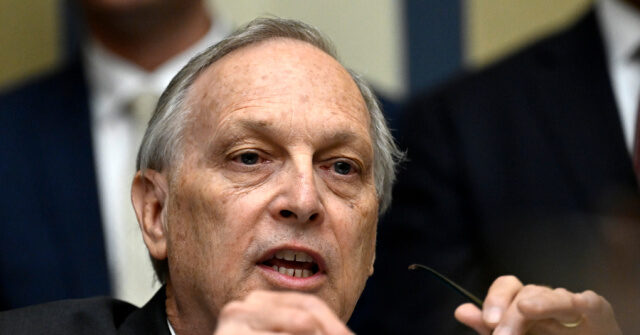
On Friday, Rep. Andy Biggs formally delivered the framework to House Speaker Mike Johnson (R-LA). The letter, co-signed by several Republican members including Reps. Eric Burlison (R-MO) and Eli Crane (R-AZ), outlines a sweeping conservative approach and calls for an end to what Biggs describes as a “failing status quo.”
The framework aims to jumpstart House discussions on concrete policy action, advancing a full legislative slate based on already-introduced bills. It is crafted to reflect key elements of President Donald Trump’s healthcare agenda, including codifying executive actions from his administration and rejecting continued funding of COVID-era Affordable Care Act (ACA) subsidies.
“The time for half measures is over,” Biggs wrote to Speaker Johnson, who earlier in the week encouraged lawmakers to pull ideas together for a broader healthcare discussion. “The American people deserve healthcare reform built on freedom, affordability, flexibility, and choice—not more subsidies, red tape, or handouts for insurance companies.”
At the heart of the proposal is a stark demand to end the extended Obamacare subsidies, which Democrats set to expire at the end of 2025. These subsidies, enhanced under the American Rescue Plan and extended through the Inflation Reduction Act, have become a flashpoint in ongoing fiscal and healthcare debates. Biggs and his allies contend they prop up what they call the “Unaffordable Care Act,” fueling fraud and driving costs higher for taxpayers.
Johnson echoed many of the conservatives’ demands for healthcare reform Tuesday, opposing any renewal of pandemic-era Obamacare subsidies and calling the ACA a fundamentally broken system, the Center Square reported. “It is not the Republicans who broke American health care,” Johnson said. “The Democrats broke health care when they created the Unaffordable Care Act 15 years ago.” He confirmed that Republican lawmakers are “pulling ideas together” and working to build consensus around a conservative alternative, adding, “We’re going to improve the system for Americans and we have good ideas to do it.”
Johnson must navigate a House Republican Conference with widely variant views on health care, including many who want to preserve most of the enhanced Obamacare credits. But the Biggs proposal is a significant step towards jumpstarting conversations for Republicans.
Other Republicans in Congress point to a recent Government Accountability Office (GAO) report showing extensive abuse of ACA premium tax credits. Investigators found that 100 percent of fictitious applicants were approved by the Centers for Medicare & Medicaid Services (CMS), with tens of millions of dollars in subsidies allegedly disbursed for policies tied to deceased individuals. GOP leaders say this validates long-standing concerns about the integrity of ACA programs.
Biggs’s framework draws heavily from existing legislation already introduced in Congress. Among the key proposals:
- Rep. Greg Steube’s (R-FL) ACCESS Act (H.R. 1157): Redirects federal support directly to families instead of insurance companies and expands insurance competition across state lines.
- Sen. Rick Scott’s (R-FL) More Affordable Care Act: Establishes Trump-backed Health Freedom Accounts that send federal healthcare dollars directly to patients, strengthens price transparency requirements, enforces Hyde Amendment protections, and maintains preexisting condition coverage while enabling new state-level flexibility.
- Rep. Andy Biggs’s Health Savings Accounts for All Act: Expands and modernizes HSAs by lifting contribution limits, removing high-deductible plan requirements, and allowing funds to cover a broader range of expenses including premiums, prescriptions, and healthcare sharing ministry payments.
- Rep. Tim Walberg’s (R-MI) Association Health Plans Act (H.R. 2528): Allows small businesses to join together in larger groups to access more affordable coverage options by spreading risk and increasing negotiating power.
- Rep. Kevin Hern’s (R-OK) Choice Arrangement Act (H.R. 5463): Enhances Individual Coverage Health Reimbursement Arrangements (ICHRAs), providing workers with portable, tax-advantaged funds to purchase the health plan of their choice.
- Rep. Chip Roy’s (R-TX) Direct Medical Care Freedom Act (H.R. 1140): Allows patients to use tax-advantaged dollars for direct primary care arrangements, promoting flexibility and price competition outside traditional insurance networks.
The package also includes Rep. Bob Onder’s (R-MO) Self-Insurance Protection Act (H.R. 2571), Rep. Chris Smith’s (R-NJ) No Taxpayer Funding for Abortion Act (H.R. 7), and Rep. Gary Palmer’s (R-AL) New Health Options Act (H.R. 1776), the latter establishing an ACA-alternative market with guaranteed coverage for preexisting conditions at lower costs.
Many of these bills reflect Trump’s repeated demands to eliminate what he has called “money-sucking” insurer subsidies and instead “send the money directly back to the people.” In a November statement, Trump wrote:
“THE ONLY HEALTHCARE I WILL SUPPORT OR APPROVE IS SENDING THE MONEY DIRECTLY BACK TO THE PEOPLE, WITH NOTHING GOING TO THE BIG, FAT, RICH INSURANCE COMPANIES.”
The letter sent to Speaker Johnson reiterates this message:
“This is a clear blueprint. Americans should be able to take cost-sharing reduction payments and underlying Obamacare subsidies straight into their pockets, giving them control instead of funneling money through insurers.”
Biggs also emphasized protecting conscience rights and blocking taxpayer subsidies for plans that cover abortion and radical transgender surgeries. The proposed framework calls for codifying these protections—such as the Hyde Amendment, which bars federal funding for abortion—into law as part of any broader reform.
Fraud prevention and fiscal accountability form another major plank. The framework calls for full income verification before subsidies are issued, ending “anytime” enrollment abuse, and ensuring benefits are reserved for citizens and lawful residents. These provisions echo reforms already embedded in President Trump’s Big Beautiful Bill and build on recent findings that improper ACA payments may exceed $27 billion annually.
Despite past criticism from Democrat leaders, including House Minority Leader Hakeem Jeffries (D-NY)—who has accused Republicans of lacking healthcare ideas—Biggs’s letter disputes that claim directly:
“For those claiming Republicans do not have a plan to address the health care needs of this country, nothing could be further from the truth. Dozens of bills are already on the table, many ready for a vote right now.”
The proposed roadmap not only answers calls for a Republican healthcare plan but seeks to unify conservatives behind a specific legislative path that integrates affordability, transparency, patient control, and accountability—key themes central to Trump’s own policy legacy. The framework also sets a legislative red line, pressuring House leadership to act swiftly or face mounting conservative frustration.
With Obamacare premiums continuing to rise despite enhanced subsidies, and with the expiration of those subsidies approaching, conservative lawmakers insist now is the time to act. The framework represents a pivotal conservative strategy to seize the healthcare debate heading into 2026.
“Republicans are overflowing with solutions,” Biggs said in the accompanying press release. “What we lack is urgency. It’s time to show the country the depth of our ideas and the strength of our vision. Now is the moment to act.”
Breitbart News
Read the full article .