


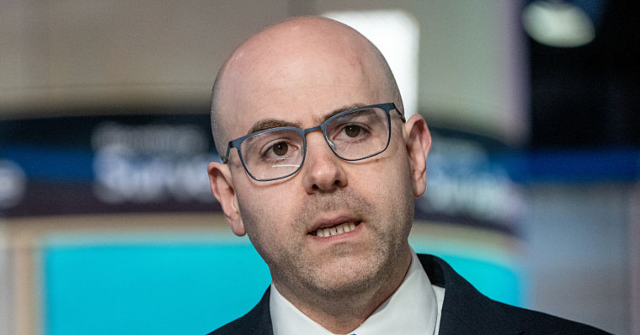
Miran spoke at the BCVC Summit 2025, at the Harvard Club of New York City about the “global stablecoin glut” and its implications for monetary policy. He is the latest governor to be confirmed to the Federal Reserve Board of Governors and previously served as President Donald Trump’s chair of the Council of Economic Advisers.
“I am excited to be discussing stablecoins. This innovation has been unfairly treated as a pariah by some, but stablecoins are now an established and fast-growing part of the financial landscape,” the Fed governor said at the beginning of his speech.
“Putatively, stablecoins were originally intended to facilitate holding and trading cryptocurrency. But their proliferation has been aided by providing users with a stable store of value, a means of payment, and the ability to move capital quickly, irrespective of territorial borders.”
Stablecoins are digital tokens that represent the value of a fiat currency, such as the United States Dollar. Stablecoins confirm transactions much faster than traditional, bank-based ACH transfers.
Miran said that the passage of the GENIUS Act, which established a clear regulatory framework for stablecoins, helps “broaden their reach and solidify stablecoins as a core part of the payment system.”
President Donald Trump has sough to make the United States the crypto capital of the world.
The Fed governor then explained that stablecoins are contributing to the “dollar’s dominance by allowing an ever-growing share of people around the globe to hold assets and conduct transactions in the most trusted currency.”
Miran charged that the growing demand for stablecoins will help lower borrowing costs for the U.S. government and interest rates through the increasing demand for stablecoins:
My thesis is that stablecoins are already increasing demand for U.S. Treasury bills and other dollar-denominated liquid assets by purchasers outside the United States and that this demand will continue growing. All else equal, this new demand lowers borrowing costs for the U.S. government.
However, as a central banker, my focus is on what I believe may be a substantial and long-term force putting downward pressure on a crucial guideline for monetary policymakers known as r*. The neutral rate, or r*, is the policy interest rate that neither stimulates nor restricts economic activity when the economy is operating at its potential once the transitory effects of cyclical economic shocks have abated.
…
In 2024, work by Marina Azzimonti and Vincenzo Quadrini estimated that if stablecoins are in widespread use and fully backed by U.S. securities, it could put as much as 40 basis points of downward pressure on interest rates.6
He explained that the GENIUS Act, which established a light-touch regulatory framework for stablecoins, requires American stablecoin issuers to back each stablecoin one-to-one in bank deposits, short-term Treasurys, overnight repurchase agreements (repos), and reverse reports backed by American Treasurys, or government money market funds.
Miran stated that that the burgeoning stablecoin industry will rise to the point of trillions of dollars, which would likely substantially increase stablecoin issuers’ need for Treasurys and other American bank assets:
The inter-quartile range of private-sector estimates compiled by Federal Reserve staff roughly projects stablecoin uptake reaching between $1 trillion and $3 trillion by the end of the decade. For reference, the Fed grew its holdings of U.S. Treasury securities by just over $3 trillion during the latest round of quantitative easing in response to the COVID-19 pandemic. In total, under $7 trillion in Treasury bills are outstanding today. If these forecasts prove accurate, the magnitude of additional demand from stablecoins will be too large to ignore.
Miran’s contention falls in line with Treasury Secretary Scott Bessent’s estimate. He wrote in June:
Recent reporting projects that stablecoins could grow into a $3.7 trillion market by the end of the decade. That scenario becomes more likely with passage of the GENIUS Act. A thriving stablecoin ecosystem will drive demand from the private sector for U.S. Treasuries, which back stablecoins. This newfound demand could lower government borrowing costs and help rein in the national debt. It could also onramp millions of new users — across the globe — to the dollar-based digital asset economy. It’s a win-win-win for everyone involved.
Miran said that there would likely be widespread adoption from both emerging market economies as well as advanced foreign economies, as emerging countries likely have limited access to banking services, and advanced countries may have burdensome restrictions on their payment systems.
“America’s capital markets are the world’s deepest, helping to support economic growth, fund new ideas, and allocate capital efficiently. However, our financial infrastructure, not unlike our physical infrastructure, could use a reboot. Stablecoins may well lead the way on this front, facilitating dollar holdings and payments domestically and abroad,” Miran argued.
He concluded in his speech, “While there has been extensive research on the topic since the advent of stablecoins a decade ago, the scope for rapid increases in issuance makes it now even more imperative to consider what widespread adoption may mean for monetary policy, both in the U.S. and abroad.”
Breitbart News
Read the full article .