


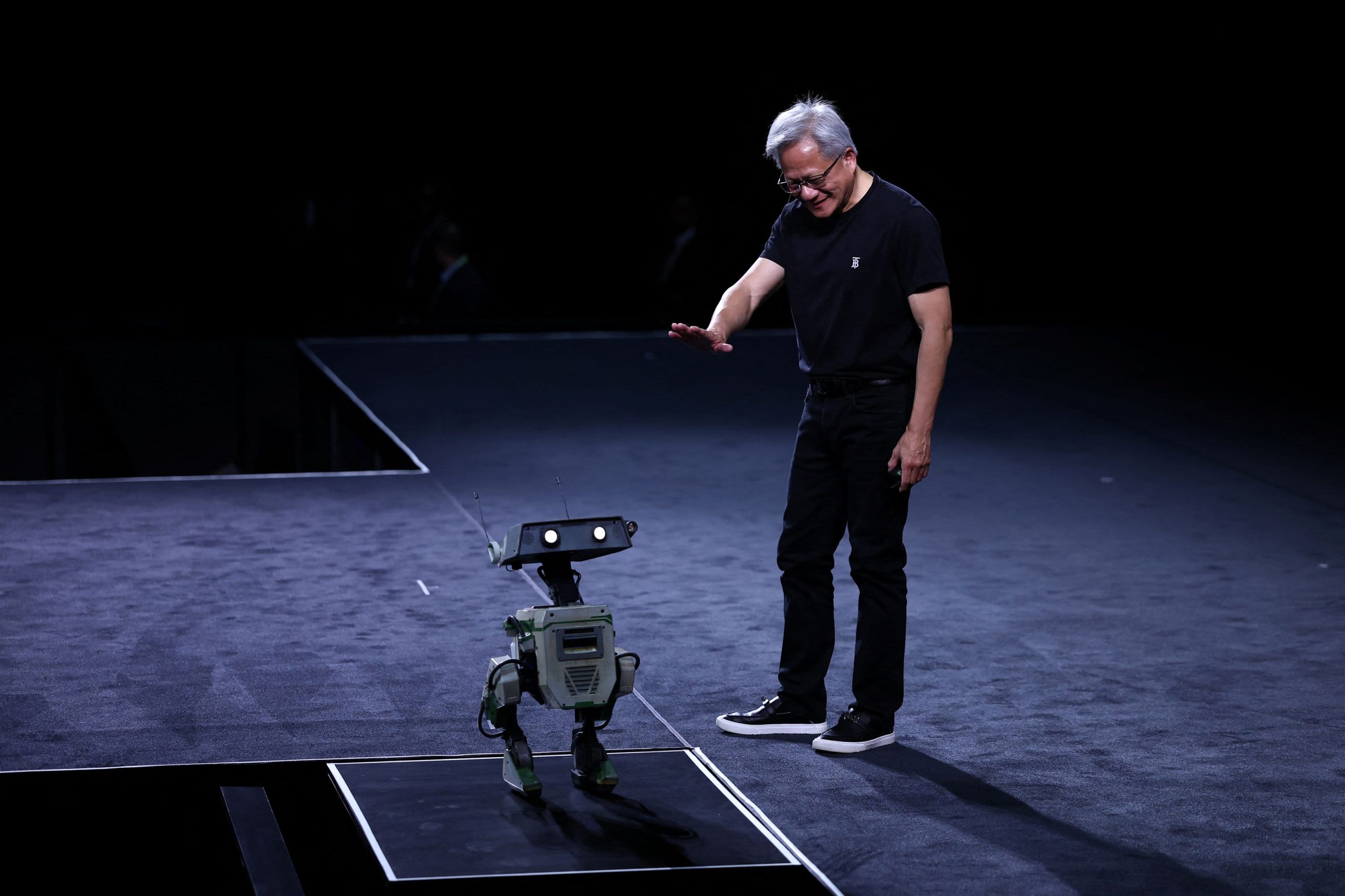
“You can now fuse your industrial capability, your manufacturing capability, with artificial intelligence, and that brings you into the world of physical AI, or robotics,” he said in an address at the World Economic Forum in Davos on Wednesday.
It presents an opportunity to “leap past” the era of software, he added, which has been led by the U.S.
Rise of AI robotics
Attention across the industrial and tech sectors has increasingly shifted to autonomous robotics as recent advances in AI promise more capabilities.
European industrial and manufacturing giants, including SiemensMercedes-Benz GroupVolvoSchaeffler
Big Tech companies have also been doubling down in the space. TeslaOptimus humanoid robots in September, Google’s
Tech investors have taken note. Companies building robotics raised a record $26.5 billion in 2025, according to deal counting platform Dealroom.
Getting serious about energy
To take advantage of the opportunity in AI, Europe has to “get serious” about its energy supply so that it can invest in the infrastructure layer, Huang said.
The region has some of the highest energy costs in the world. Microsoft boss Satya Nadella said energy costs will be a key factor in determining how successful countries are in the AI race at WEF on Tuesday.
“I think that it’s fairly certain that you have to get serious about increasing your energy supply so that you could invest in the infrastructure layer, so that you could have a rich ecosystem of artificial intelligence here in Europe,” Huang said.
Europe has been grappling with limited access to energy as hyperscalers look to roll out AI infrastructure across the region.
That rapid buildout is showing no signs of slowing down, said Huang. AI has started the “largest infrastructure buildout in human history,” he told the audience at WEF.
“We’re now a few hundred billion dollars into it. There are trillions of dollars of infrastructure that needs to be built out.”
International: Top News And Analysis
Read the full article <a href="Read More” target=”_blank”>here.